


Category : Pilgrim’s Chronicles
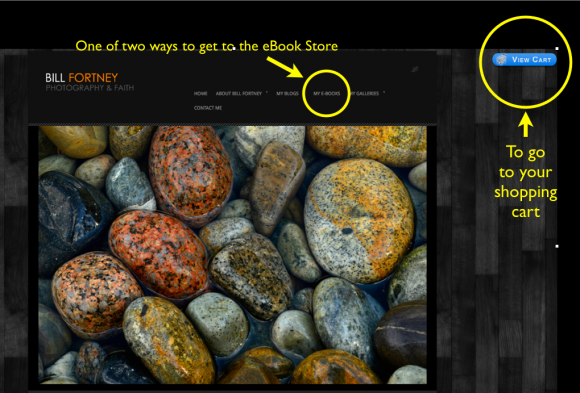
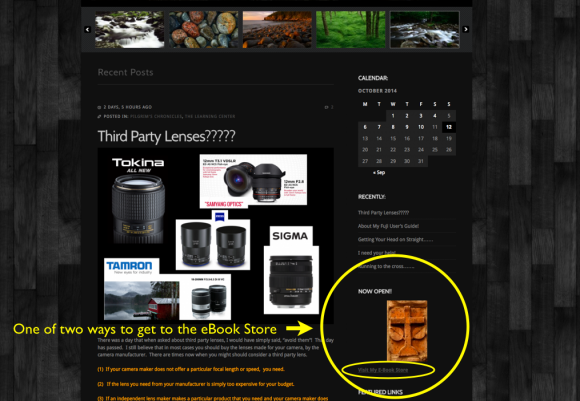
Hey guys, good news, the eBook store is open early!! My dynamite web person did a great job and she got us up and running before Wednesday, so you can enjoy browsing the site now! The site is fully functioning and you can order books now! Please go and enjoy the free book from me. I want people to see what the books are like so I’m offering one free for anyone visiting the eBook store. It’s easy:
Click on either of the two buttons that take you to the eBook store. One is in the Menus at the top, the other just to the right of the start of blog entries, look for the stone cross it right under that.
When you click on either button it will take you to the store, where you will see all the current books listed. First the FREE book! The last book in the list, the book titled The 7 Steps to Taking it to the Next Level is free! Simply add it to your cart and when you call up the cart it will say $4.99, so in the COUPON space just below enter FREE4ME, update the cart, that will enter a $4.99 discount and you can simply push Continue Checkout. Fill out the three information fields and push CONTINUE and you will receive an email with instructions on how to down load the book! It will take you to a screen where you simply click download and it will be on your desktop in no time! We’ve worked hard to see that the process is simple and quick. *Please let me know what you think!
The free book offer lasts until the end of November!
Also note that the Foundation Series (highly simplified basic photo knowledge), are in 6 volumes, covering the most important concepts for beginning photographers. They are $4.99 each and the entire set can be purchased for $24.99, a savings of $4.99.
In the coming months more advanced books will be released, please keep in mind these are starter books aimed at the photographer that is just getting into photography. While the future nooks will go into a lot more depth, my goal will always be to keep them to the point!
One other navigational point. When you go to the store where all the books are listed you will notice a button at the bottom that says VIEW MORE By clicking there you will see a more thorough description of the book and few sample pages, you can add books to the cart from there as well!
Hope you enjoy the new books!
Blessings,
the pilgrim
This post has 6 comments. Click here to read them
This entry was posted on Sunday, October 12th, 2014 at 9:05 pm
You can follow any responses to this entry through the RSS 2.0 feed.
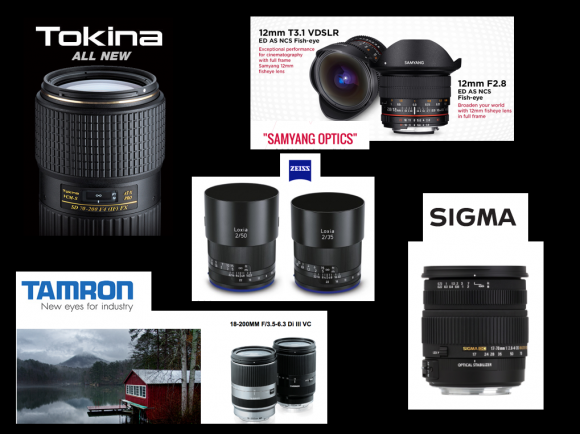
There was a day that when asked about third party lenses, I would have simply said, “avoid them”! That day has passed. I still believe that in most cases you should buy the lenses made for your camera, by the camera manufacturer. There are times now when you might should consider a third party lens.
(1) If your camera maker does not offer a particular focal length or speed, you need.
(2) If the lens you need from your manufacturer is simply too expensive for your budget.
(3) If an independent lens maker makes a particular product that you need and your camera maker does not make the same product!
What about quality? That is a good questions and it is not easy to answer. First know that all lens makers even the big boys like Canon and Nikon make several levels of lenses in terms of quality. If your camera maker offers two 70-300 lenses and the price difference is very significant, you can bet the build quality and optical quality probably is too! When your grandfather said, “You get what you pay for!” He knew what he was talking about! Twenty years ago a independent lens was rarely as good as the manufacturers original lenses, but the third party folks have really gotten their act together and now produce some very fine optics. The mechanical quality is all over the board, but honestly it is too, even with the major manufacturers.
How about the premium brands like Zeiss? Zeiss lenses are expensive, very expensive, and if you can afford them, probably worth it. Zeiss has a very long history of making extremely good glass, well designed and set in premium quality constructed barrels and mounts. Some Zeiss lenses are clearly superior, others pretty close to the quality of the other best lenses in their focal length.
How good is the consistency from lens to lens within a manufacturers line? Let’s say you buy a 70-200 f 2.8 zoom lens from any major manufacturer or third party company. If there are six lenses new on the shelf at the dealer, does it matter which one you buy? You bet! All manufacturers will have small differences from lens to lens in the manufacturing process. The better companies have tighter quality control which makes the performance more consistent, but does not eliminate the fact that an occasional lemon slips through. Does your lens maker pull one out of every 3 from the line to test, or 1 of every 10, or maybe one of every one hundred!!!!!
So what can you do to make sure you get a good value for your dollar spent on lenses? I have several suggestions that will at least put the odds in your favor!
A. Be your own quality control department. Deal with a dealer that has a return privilege. When you buy a lens make a thorough test the day you buy it. Have some comparison shots of the same test subject that you’ve made with a lens you have high regard for, and compare them. I have a old building with a brick wall in my town, and at the right time of day when the bricks are cross lit, I can test a lens and see what the sharpness is, corner to corner. I have a couple of other color targets I can shoot. Since I’ve done this with hundreds of lenses, I can tell right away how a lens stacks up. If it doesn’t, it goes back in the box and back to the dealer and I try another. * Now honestly in 45 years of being a serious photographer I’ve had very few lenses that were lemons, but I have had a few!! A great relationship with your dealer is your best insurance against getting stuck with a lens that will be a disappointment.
B. Check the lens for build quality. This is hard without taking a lens apart but ask a camera repairmen what they think of the quality of certain lenses. Trust me they’ve taken enough apart to know what’s inside! You can also compare the weight and smoothness of opposing lenses right in the store, and if you trust your sales person, (and why would you be shopping with him if you didn’t!) ask his advice. A good retail sales person that will shoot you straight is incalculable. You can also ask friends who have purchased lenses your interested in about their experience! Lastly you can read test reports, but be careful, some publications accept advertising from the same companies whose products they review! This does not always create a conflict, but it’s wise to be careful!
C. Be realistic about your needs. Are you constantly traveling and shooting around the world in harsh environments using your gear everyday? Or do you shoot a couple of times a month and on holidays? You don’t need the highest end, seriously built, lenses for occasional use.
D. Talk to friends, associates, and people you meet about their lenses. Ask them if they have been happy with them, if they seem to be holding up. Visceral information is valuable!
Lenses are one of the very most important parts of the imaging system. Do your homework, check around and test your selections and then go out and use them to make great images!!
Blessings,
the pilgrim
This post has 4 comments. Click here to read them
This entry was posted on Friday, October 10th, 2014 at 3:06 pm
You can follow any responses to this entry through the RSS 2.0 feed.
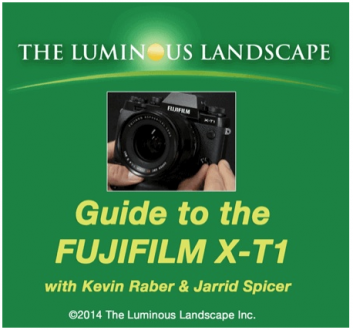
There is a lot of excitement in the emails I’m getting about my soon to come Fuji X System User’s Guide. It appears that our rowdy Fuji loving group is an enthusiastic bunch! Before I get into some details about the upcoming book, Let me mention a great learning aid that the Luminous Landscape folks released yesterday. It is a 3 hour video that runs you through a lot of good info on the X-T1. It is taught by Kevin Raber and Jarrid Spicer, two guys who certainly know there way around the photo industry and photography. It is well done and worth the discounted $24.95 price! Here is the link:
http://www.fujirumors.com/
Now on to my new book! There are several excellent books that walk you through the menus. features, and specs. That is all important and any Fuji user should be familiar with all of that! What I will be doing is sharing how to take a very incredible system and use it to go out and have a lot of fun and make great images. I want to delve into Fuji’s history with the X System and how it has and seems to continue to evolve! Fuji makes several cameras, each are unique and have a special place in an arsenal. I want to talk about some of the real strengths and weaknesses of the system. One of the real strengths is the lens line and I have a lot to share about each individual lens that I have experience with.
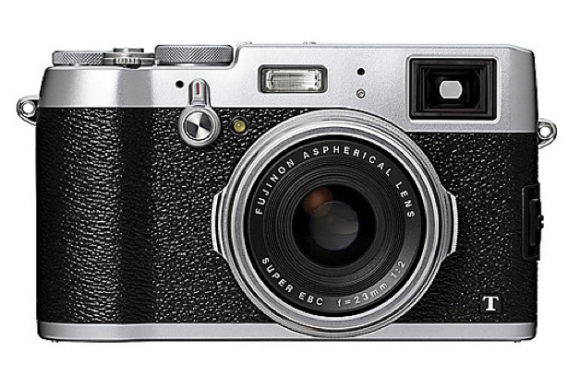
The first camera was the X100, above is the latest, third iteration of that camera. The X100 was in many ways a Beta product which is not at all uncommon in the camera industry today. There is a good reason why camera companies produce Beta products. The buying public demands the products they want NOW! Often there really isn’t time to get everything perfect. In the old days of film cameras a pro body might have a shelf life of 8 or even 10 years, that gave the companies a long time to design the next model. The film cameras were not nearly as complex as a modern digital camera. In order to stay active in the market, they simply have to push products out and let us be the final testers. This is where I’m very proud of Fuji. They might have offered us a product that needed more work, but they have done that work and not only released two more cameras in the same line that each are greatly improved. They even shared the firmware to keep the original X100 very relevant. That cost them camera sales, but it was the right thing to do! I’m always in the corner of those that do things the right way, for the right reason. Fuji has done that.
Here are few things I want to cover;
ONE: The Fuji user’s world seems to be somewhat divided between single focal length and zoom lenses. I want to show why you just might want to own a few of each.
TWO: The film palette options in the Fuji X cameras can greatly enhance how you capture various subjects, but you need to learn which ones work best for what kinds of subjects. We will explore that in depth.
THREE: The Fuji X cameras are great at certain things, but they are not the perfect fit for other kinds of photography. As Clint Eastwood said in his role as Detective Harry Callihan, ” A man’s gotta know his limitations.” No matter how good a camera is, it does have limitatio0ns, it’s best to know them and know if there is a workaround!
FOUR: The saved weight of the Fuji System is a big advantage, but you still have to give a lot of thought to how to build the system , how to carry it, and when to use which parts!
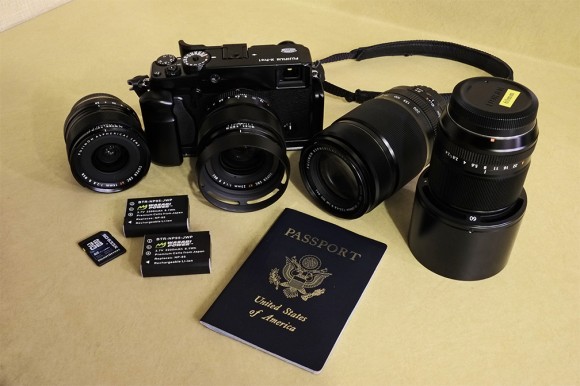
I was one of the early adopters of the Fuji X System and I think I can share some information that will make any Fuji user’s experience better!
Blessings,
the pilgrim
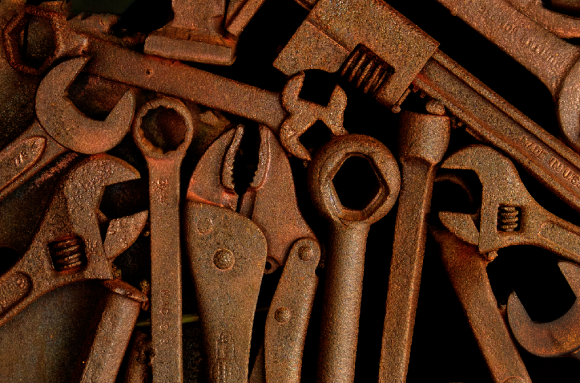
The glories of shooting the Fuji!
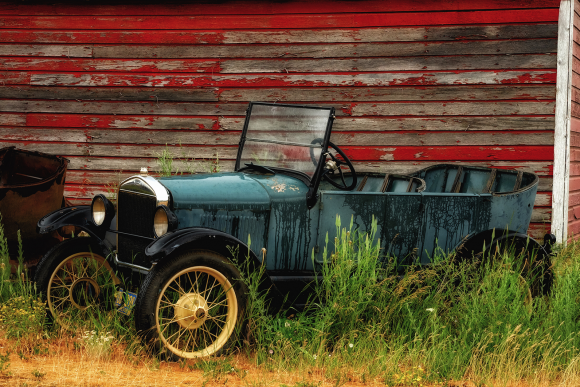
And one more!
This post has 10 comments. Click here to read them
This entry was posted on Thursday, October 9th, 2014 at 3:11 pm
You can follow any responses to this entry through the RSS 2.0 feed.
For some time now I’ve been obsessed with the new push to get out the eBooks! It’s really a great thing because secretly, (well not anymore), my greatest love after the Lord, my family and photography is writing! I truly love to try and express myself in the written word, emphasis on “try”! Some activities make us happy and writing is one of those for me. So I got an email yesterday from a good friend who was concerned because of my “push” to get these eBooks done, she was afraid I had a terminal illness! I do have a terminal health issue, it’s called life! I’m 68 and will be 69 in February so the clock is ticking! Now I may live another decade or more, but I really want to share a whole lot of stuff, so I’m dedicating myself to getting it done now….
One book I’m planning is the title of this blog post, “Getting Your Head On Straight!” I meet people all the time that express to me that they have a very deep desire to get really good at photography, and they want my advice. I also have a great desire to help them, but truthfully it’s not just about aperture, shutter speeds, which camera body and how sharp is your lens! No, I think it all starts with getting your head on straight. Let me give you the brief outline of that book, which of course, will get fleshed out a great deal more.
Step One: What is your goal? Now you can’t just say become a great photographer, you have to quantify what you mean by GREAT! By great do you mean highly respected by others, widely published, the author of many best selling books, having one man shows in prestigious galleries? You have to have a more reasonable goal than that. Keep in mind that Joe McNally, a truly great photographer, is having his first one man show in Santa Fe right now! Joe is well up in his fifties and has worked hard as photographer his entire life. Joe is considered by many, me included, as one of the greatest photojournalists in the history of photography! Do you really want to saddle your passion with such a lofty goal. Why not just have the goal of just getting better each day?
Step Two: Be realistic and set a goal that is attainable. Instead of 6 best selling books, why don’t you decide that you are going to try to really get the fundamentals of photography down pat, and see where that takes you! It may not shock you to find out that Joe started where you are, and he worked very hard for along time to get to that gallery in Santa Fe! Make several short term goals, that when added up get you to that book or a gallery show! It can be done, but it is a process!
Step Three: Get used to the idea that this journey you are on, is a long one, and it is going to take time! Even more important, determine that you are going to enjoy the journey! Somewhere down the road of this journey you are going to realize the great joy that comes from learning, why not start enjoying it now. i treasure my great experiences, friends, and laughter to any of my personal achievements!
Step Four: Get used to disappointment. I love that line from a Princess Bride, because folks, in life, you will have disappointments, and failures. Keep in mind that failure is an opportunity to learn how not to do something. In the end, your progress as a photographer will be determined by how much you fail, and how much you’ve learned from your failures. Sometimes it hurts, but it is for your own good! No one ever gets better without some failure along the way!
Step Five: Relax and have fun. Photography can bring you many great treasures, experiences, and wonderful friends. Enjoy the ride, the destination is just up ahead, have fun getting there! When you do arrive at the destination, you will realize that it was the journey, after all, that was the greatest joy! The more you relax, the better your vision will be, and of course, the better your images will be too!
Now the book will go further and have a lot of suggestions on how to implement these ideas, but you get the idea. Don’t fail to enjoy this great craft!
Blessings,
the pilgrim
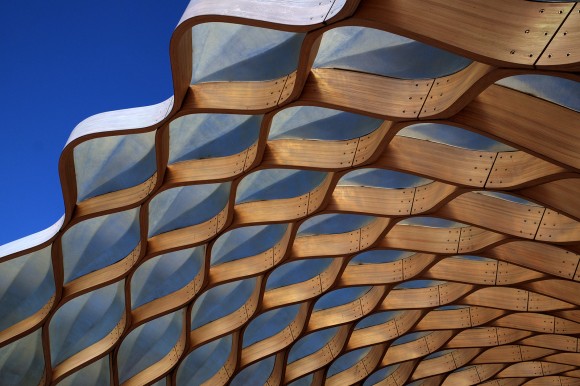
* Photo Note: Roof of wooden beams in a pavilion in Chicago. Fuji XT-1 – Fujinon 10-24 zoom
This post has 7 comments. Click here to read them
This entry was posted on Wednesday, October 8th, 2014 at 6:46 pm
You can follow any responses to this entry through the RSS 2.0 feed.